
Marlon Brando
Marlon Brando
Before there was cool, there was Marlon Brando figuring out what cool was going to look like — and then becoming it so completely that everyone who came after him was essentially working from the same foundation.
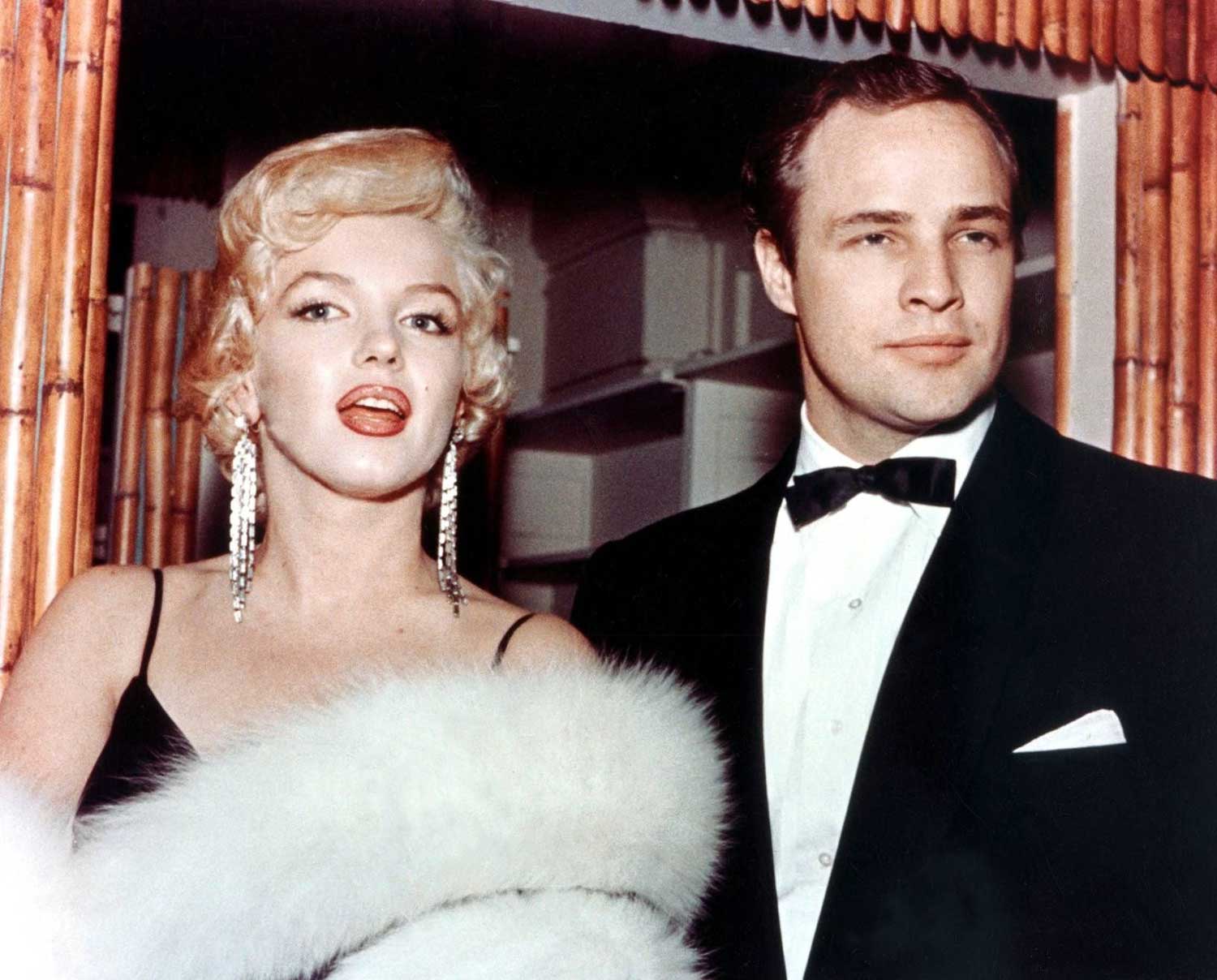
James Dean studied him. Steve McQueen refined him. Every actor who has ever leaned against a wall with his hands in his pockets owes him something. Born in 1924 in Omaha, Nebraska, Brando arrived in New York in his late teens with a physical intelligence — a way of occupying space that made everything around him feel slightly less interesting by comparison. He was the blueprint. Everything else was iteration.
The year is 1953. The Wild One is in cinemas. Brando rides onto screen in a leather motorcycle jacket, a peaked cap, Levi’s 501s, and engineer boots — and without quite meaning to, invents a visual language that the next seventy years of menswear would spend itself translating.
The jacket was a Perfecto by Schott NYC. Black. Asymmetric zipper. Worn slightly open, naturally. The jeans were raw denim, slim on the leg, turned up at the cuff just enough to show the boot. The combination — leather jacket, white tee, dark denim, clean boots — remains one of the most powerful casual uniforms ever assembled. Wear it right and it still works today, exactly as it did then.

A Streetcar Named Desire (1951) gave the world something just as significant. Brando wore a plain white fitted t-shirt through most of that film and turned a piece of underwear into a statement of masculine intent. Before Brando, the white t-shirt was literally underwear. After him, it was an outfit. That is the kind of cultural shift that only happens once, and he accomplished it by simply dressing the way he felt comfortable.

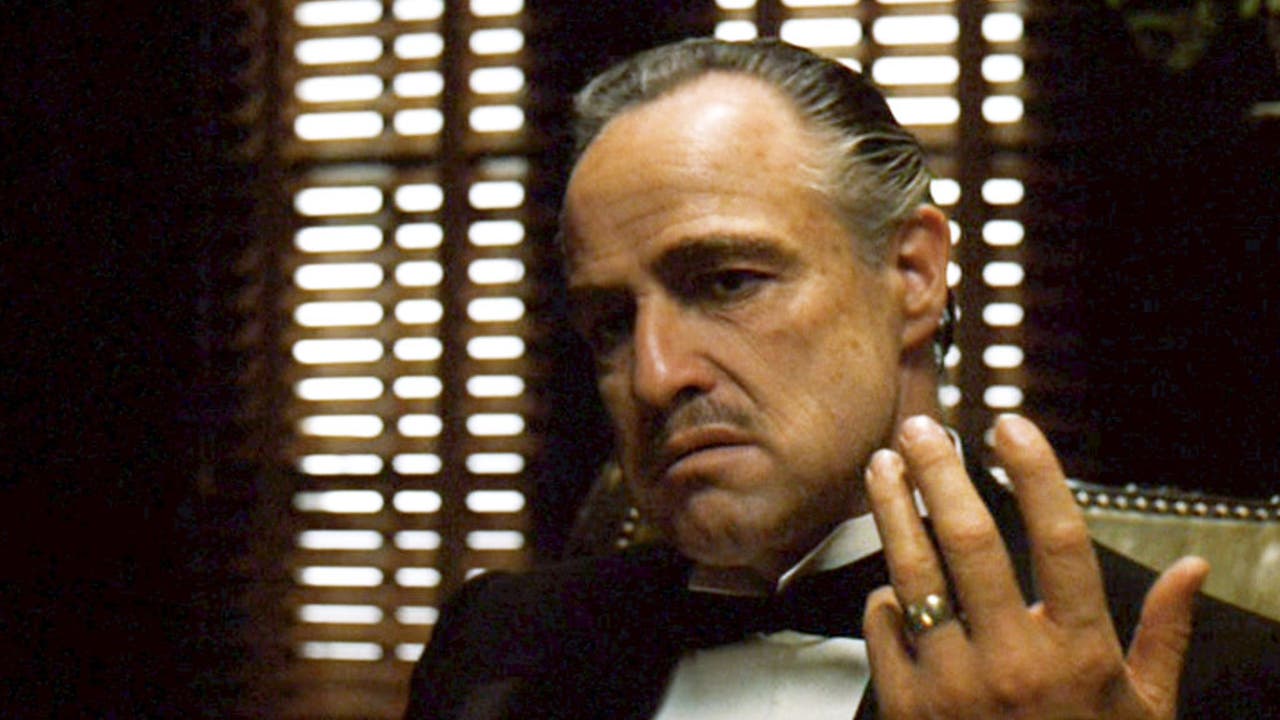
A decade and a half later, Brando reinvented himself entirely. Don Vito Corleone in The Godfather (1972) is the other side of the same coin — older, heavier, slower, and somehow even more commanding. The suits in that film are a lesson in old-world Italian tailoring: dark, structured, slightly generous at the shoulder in the way that real authority dresses when it has nothing left to prove.
The detail most people overlook: Corleone’s collar is always slightly loosened. The tie placed with intention rather than precision. A deliberate signal that the man is comfortable enough in any room to rise above the need for visible perfection. Watch The Godfather with the sound off for ten minutes and notice how Brando commands every frame with almost no movement at all. The stillness is the performance.
“Attitude is the fit. He wore almost nothing and looked like everything.”


Away from cameras, Brando was effortlessly, almost aggressively casual. Plain white t-shirts. Straight-leg chinos. Loafers worn without socks before anyone had a name for it. He was photographed constantly in the early fifties looking like he had grabbed the first thing available and made it work, which is of course exactly what he had done. The ease was genuine. He was unbothered, and unbothered reads on camera and off it with the same quiet authority.
Motorcycles. The Triumph Thunderbird in The Wild One became as iconic as the jacket. Off screen he rode for pleasure, at speed, with no performance involved. He spoke in interviews with a directness that occasionally bordered on impatience for the question — measured, sharp, and absolutely clear about where his interest ended. When asked once what he looked for in a role, he said he wanted to find the moment of truth in a man — the instant where the performance drops and something real appears. That instinct extended to everything he did.
Start with the leather jacket. Learn to wear it as a natural extension of how you move. Pair it with the plainest things you own: white tee, dark denim, clean boots. Let the jacket carry the weight and leave everything else alone.
Study his stillness. In a world built on reaction and volume, the man who holds his composure and says half as much as everyone else commands twice the attention. Brando understood this before he was twenty-five and never unlearned it. Find the moment of truth in every room rather than the impressive surface. Commit to what is real and let everything decorative fall away. That is the move. It worked in 1951. It works now.
The Gentleman Who Wants
the Full Picture
Knows where to find it. Subscribe to MGA Premium and step inside the complete archive — every Icon, every review, every editorial, in full.
Become an MGA Premium MemberEditorial commentary reflects the independent analysis of Modern Gentleman Archive. All factual reporting is drawn from cited third-party sources. MGA makes no claim of ownership over source material.